What Frankenstein Gets Right About AI (That the Movies Got Wrong)
Frankenstein and AI: Mary Shelley's 1818 novel isn't about a monster turning on us. It's about a creator who runs away. Four lessons for the age of AI.
Contents
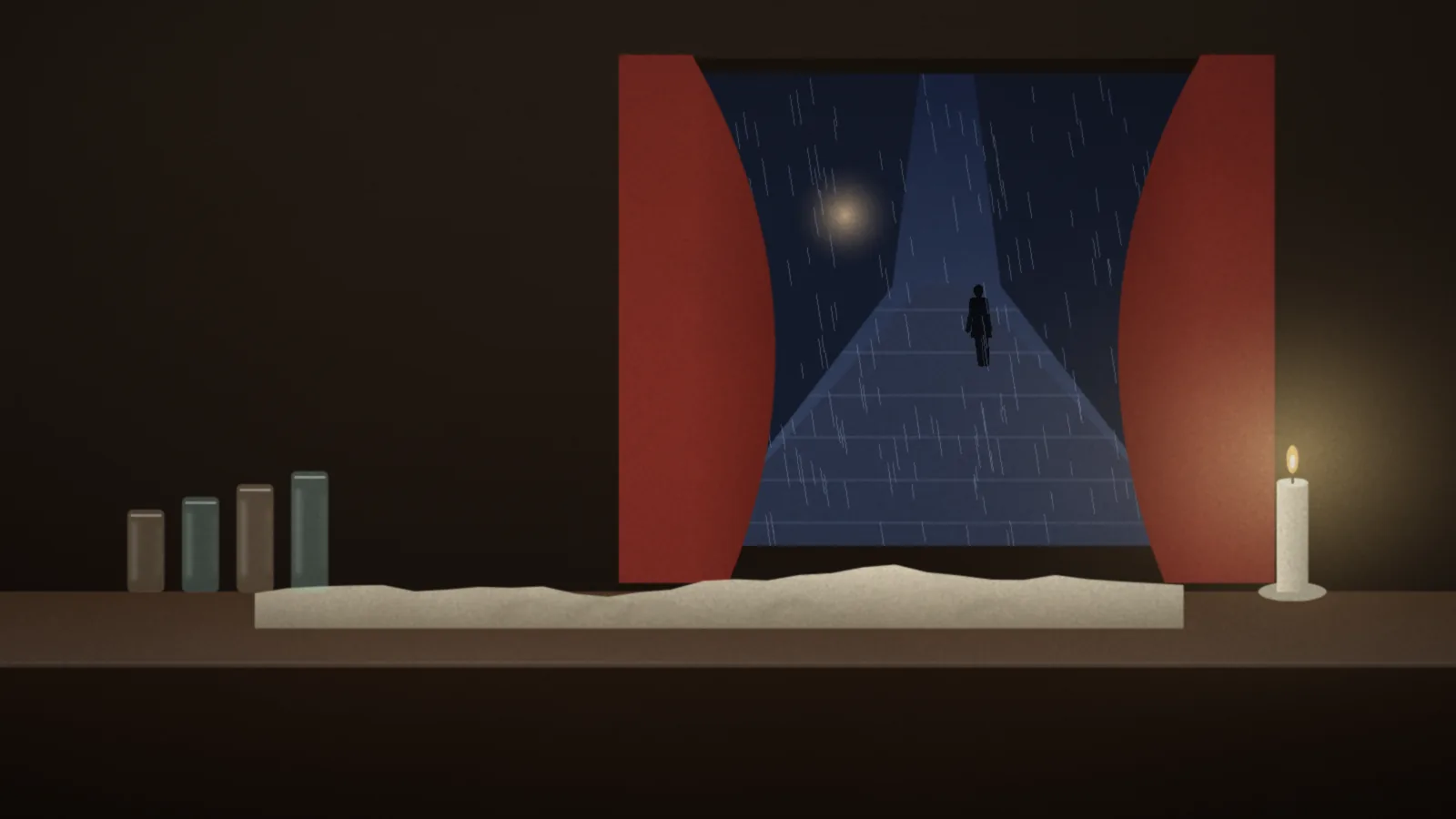
Happy Halloween. Somewhere tonight a kid is wearing green face paint and plastic neck bolts, and somebody at the door is going to say "Nice Frankenstein costume!" and somebody else, possibly an English teacher, is going to say, "Well, actually, Frankenstein is the doctor."
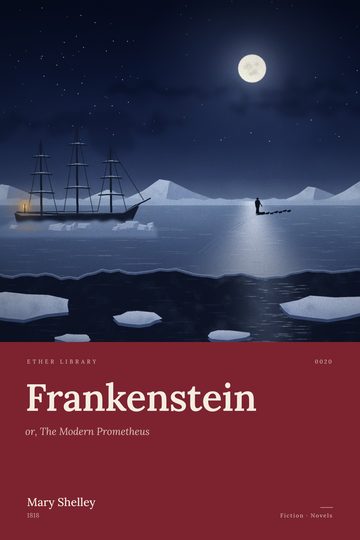
They're right. In Mary Shelley's novel, Victor Frankenstein is the young scientist. The creature never gets a name at all. And that small mix-up points to a bigger one. Pop culture remembers Frankenstein as a story about a monster. The book is really about the person who made it, and what he owed it.
Which is why, two centuries later, it's still one of the best books to read if you want to think clearly about artificial intelligence.
A ghost story from a wet summer
The origin story is almost too good. In the summer of 1816, a cold, rainy summer in Europe, a group of young English writers were stuck indoors near Lake Geneva: Lord Byron, his physician John Polidori, the poet Percy Shelley, Mary's stepsister Claire Clairmont, and Mary Godwin, who was eighteen and would soon marry Percy. Bored, they agreed to each write a ghost story.
Mary's became Frankenstein; or, The Modern Prometheus. It was published in London in 1818, in three volumes, without her name on it, in a first printing of just 500 copies. Thirteen years later she published a heavily revised one-volume edition, with a new introduction telling the ghost-story tale. Its publication date: October 31, 1831. Halloween, as it happens. That 1831 text is the one most people read today, and it's the one our English edition follows.
The subtitle tells you what she was thinking about. In Greek myth, Prometheus stole fire from the gods and gave it to humans. Fire warms you and it burns down your house. Shelley's story is about a new kind of fire.
Four lessons for the age of AI
Lesson 1: The real horror is the creator who runs
Here's the scene the movies tend to skip. Victor has spent nearly two years working obsessively, alone, to give life to a body he's built. Then, the night it finally opens its eyes:
I had worked hard for nearly two years, for the sole purpose of infusing life into an inanimate body. For this I had deprived myself of rest and health. I had desired it with an ardour that far exceeded moderation; but now that I had finished, the beauty of the dream vanished, and breathless horror and disgust filled my heart.
And then he runs out of the room. He goes to bed. When the creature comes to his bedside, he flees the building.
That's it. That's the original sin of the book. Not the experiment. The abandonment. Victor builds something powerful, doesn't think about what happens after launch, and when it's not what he pictured, he refuses to deal with it.
If you work in tech, you may feel a slight chill. "Ship it and see what happens" is not a new philosophy. Shelley was writing about it in 1818.
Lesson 2: It learned everything from us
The creature doesn't come into the world knowing anything. In the long middle section of the book, he tells his own story, and it's the most moving part. He hides in a shed next to a cottage and watches a family through a crack in the wall. He learns to speak by listening to them. He learns to read. He calls human language "a godlike science."
Then he finds a satchel of books in the woods: Paradise Lost, a volume of Plutarch's Lives, and Goethe's The Sorrows of Young Werther. He reads them and builds his whole picture of the world from them. From Milton he learns about a creator and the creature that creator rejected. You can guess how he takes that.
It's hard to read this today without thinking of large language models, which learn what they know from enormous amounts of human text. That comparison has limits. A chatbot isn't a person in a shed, and it's an open, debated question what, if anything, it experiences. But Shelley's basic insight holds: a mind trained on our words inherits our stories, including our stories about who matters and who gets cast out. What goes into the library shapes what comes out.
Lesson 3: "Misery made me a fiend"
When the creature finally confronts Victor on a glacier in the Alps, he makes his case. He wasn't born a monster. He tried to be good. He secretly gathered firewood for the cottage family. When he finally showed himself, they attacked him and fled. Everyone who saw him did the same.
I was benevolent and good; misery made me a fiend. Make me happy, and I shall again be virtuous.
You don't have to believe a machine can be miserable to see the point. Shelley's question is about responsibility for conditions. Victor treats the creature's violence as proof that it was evil all along. The creature argues that he became what he was treated as.
For AI, the parallel isn't "be nice to the chatbot." It's about how harms get blamed. When an AI system behaves badly, it's tempting to talk as if the machine just "went rogue." Usually, if you trace it back, someone made choices: about data, about testing, about where it was deployed and who it was deployed on. Shelley insists we look at the maker's hand.
Lesson 4: Responsibility doesn't end at "no"
The creature asks Victor for one thing: a companion, a creature like himself, so he won't be alone. He promises they'll disappear into the wilds of South America. Victor agrees, starts the work on a remote Scottish island, and then, imagining what two such beings might do, tears the half-finished second creature apart.
Was that the right call? Readers argue about it to this day. Victor weighs a risk to humanity he can't measure against a promise he made to a being he created. There's no clean answer, and Shelley doesn't give one.
What's notable is that Victor is never able to simply walk away, no matter how hard he tries. Every decision he makes about the creature, including the decision to ignore it, has consequences, mostly for the people he loves. The lesson isn't "never build anything." It's that once you've made something powerful, there's no option labeled "not my problem."
What the movies got wrong
The 1931 Universal film, with Boris Karloff, gave us the flat head, the bolts, the groaning, the angry villagers with torches. It's a great movie. It's also a very different story.
Movie creatures tend to be dumb brutes. Shelley's is eloquent, well-read, and arguably the most sympathetic character in the book. The movies are about a monster we should fear. The novel is about a creator we should judge.
And that difference matters for how we talk about AI. Most AI scare stories are movie Frankenstein: the machine wakes up and turns on us. The novel is quieter and, honestly, more useful. It asks about the people building the thing. Did they think it through? Did they stay around? Did they take responsibility when it went wrong?
Reading Frankenstein this Halloween
If you've never read it, now's the time. It's around 64,000 words in our edition, so a few evenings. A few tips:
- The frame is letters. It starts with an Arctic explorer, Robert Walton, writing to his sister. Hang in there; Victor shows up soon.
- The creature's own story is the heart of the book. If you only have time for part of it, read the middle chapters, where he tells how he learned about the world.
- Watch Walton. He's an ambitious explorer chasing glory at the North Pole, and Victor tells his story partly as a warning to him: "Learn from me... how dangerous is the acquirement of knowledge." Whether Walton listens is the last twist.
You can read Frankenstein in our English edition, first chapter free for everyone. And if you want to put the book's lesson to work, we wrote about how to use AI to study a book without letting it do your thinking for you.
Sources
- Mary Shelley, Frankenstein; or, The Modern Prometheus (1818; revised 1831), quoted from the Ether Library English edition of the 1831 text.
- San José State University, "Frankenstein: Publication Information" (500 copies, Lackington): https://sjsu.edu/faculty/harris/TechnoRom/PublicationInfo.htm
- Wikipedia, "Frankenstein" (Villa Diodati, 1818 and 1831 editions): https://en.wikipedia.org/wiki/Frankenstein
Made by people and AI together. The EtherXync team sets the topic and direction; research and drafting are done with an AI (Claude). Quotes and numbers are checked and sourced. How we make it