How to Read More Books: A Realistic Plan for People With Jobs
How to read more books without speed reading or quitting your job: the 20-minutes-a-day math, where the time hides, and why quitting a book is allowed.
Contents
The average American adult read 12.6 books in 2021, according to Gallup. That sounds respectable until you look closer. It was the lowest number Gallup had recorded in more than thirty years of asking. Only 27% of adults read more than ten books that year, down from 35% in 2016, and 17% read none at all.
And averages hide a lot. A small group of heavy readers pulls the number up. Plenty of people who'd describe themselves as "book people" are actually reading two or three a year and feeling vaguely guilty about it.
If that's you, here's the good news. You don't need to speed read, wake up at 4:30, or quit your job and move into a cabin. You need about twenty minutes, a plan for where those minutes come from, and permission to stop reading books you don't like.
The 20-minutes-a-day math
Let's start with arithmetic, because it's more encouraging than you'd think.
In a 2019 review of 190 studies, the psychologist Marc Brysbaert estimated that adults read silently at about 238 words per minute for nonfiction and about 260 for fiction. Call it 250 to keep the numbers easy. Classics and dense books will be slower; light novels faster.
At 250 words a minute:
- 20 minutes a day = 5,000 words
- 5,000 words a day × 365 days = about 1.8 million words a year
What does 1.8 million words buy you? Here's how that maps to some real books, using word counts from our own editions:
| If every book were... | Approx. words | Books per year at 20 min/day |
|---|---|---|
| The Great Gatsby | 48,000 | about 38 |
| A typical 300-page novel | 90,000 | about 20 |
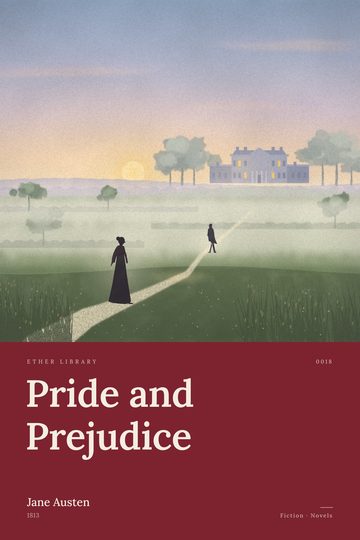
| Pride and Prejudice | 122,000 | about 15 |
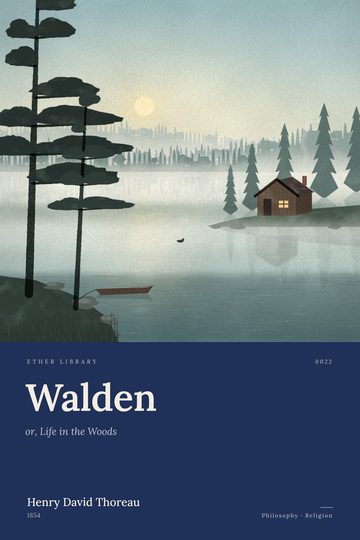
| Walden | 116,000 | about 15 |
That's real-world 20 to 30 books a year, from a habit shorter than a sitcom episode. Even if you only hit your twenty minutes on two out of three days, you'd still be well above the national average.
Of course, nobody's reading speed is constant, and life isn't a spreadsheet. But the math makes one thing clear: the problem usually isn't time. It's that the time comes in pieces and goes somewhere else.
Where the time actually hides
Most people don't have a spare hour. Almost everyone has several fifteen-minute gaps that currently go to their phone.
Look for these:
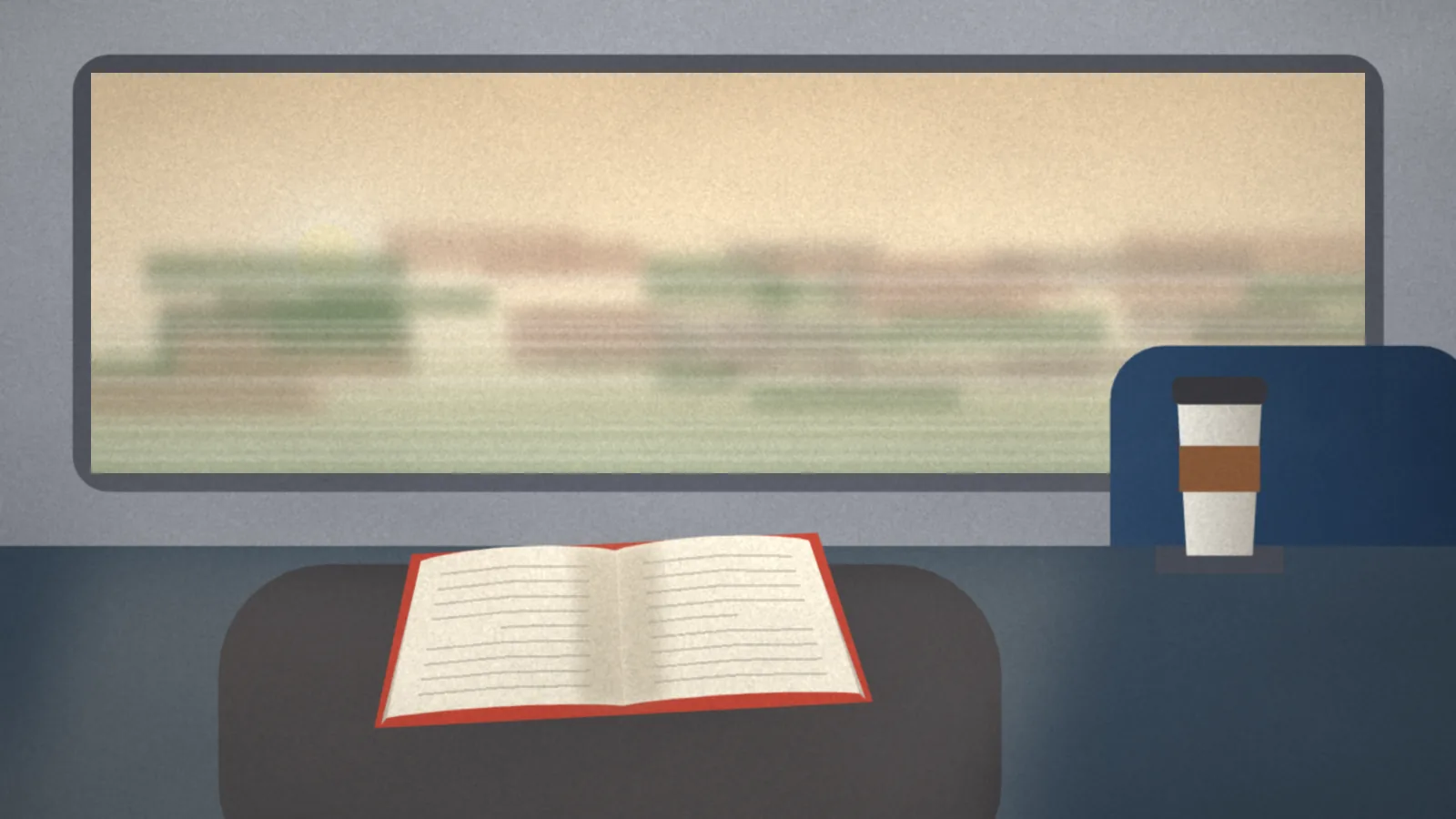
The commute. If you take the train or bus, this is prime reading time, and many heavy readers get most of their books done here. If you drive, it's audiobook time. (Yes, audiobooks count. We wrote a whole post on that.)
Lunch. Fifteen minutes with a book instead of a feed, two or three days a week, adds up to several books a year by itself.
The waiting room. Doctor's office, kid's soccer practice, the DMV. Keep a book on your phone so it's always there.
The last twenty minutes before bed. Instead of scrolling until you fall asleep, read until you fall asleep. It's a calmer way to end the day for most people, and the book is easier to put down than the feed.
You don't need all of these. You need one reliable slot. Pick the one that already exists in your day and attach the reading to it. "When I sit down on the train, I open my book" is a habit. "I'll read more this year" is a wish.
Seven habits of people who read a lot
Talk to people who read 50 books a year and most of them aren't doing anything magic. They just have a handful of habits that remove friction.
1. They always have a book within reach. On the nightstand, in the bag, on their phone. If you have to go find a book, you won't.
2. They have the next book lined up. The dangerous moment is when you finish a book and don't know what's next. That's when a week turns into a month. Keep a short list, even three titles.
3. They read more than one book at a time. A serious book for mornings, a fun one for bed, an audiobook for the car. Different books for different moods means there's always one you feel like reading.
4. They quit books. This is the big one. If you're 50 pages in and dreading it, stop. A book you're avoiding is blocking every book you might enjoy. You can always come back in five years, when it may be exactly the right book.
5. They don't care about "good" reading. Romance, thrillers, graphic novels, cookbooks with stories in them. Reading for fun builds the habit that later carries you through harder books.
6. They read the physical book for focus and the ebook for convenience. There's some evidence that people understand dense, informational texts a bit better on paper than on screens, though the gap is small and depends on the task. A good rule: hard books on paper if you can, everything else wherever it's handy.
7. They track loosely. A note on your phone, a Goodreads shelf, a list in the back of a notebook. Seeing the list grow is satisfying. Just don't let it turn reading into a competition with yourself.
A word on goals
Should you set a goal like "52 books this year"? Maybe. Some people love it. Others find it turns them into a reader of short, easy books who skips anything long because it would hurt the count.
A gentler option: set a time goal instead of a book goal. "Twenty minutes, five days a week" rewards you for showing up, whether you're reading a 150-page novella or a 900-page Russian novel. The books will follow. We dig into why time-based plans tend to beat outcome goals in how to set goals you'll actually keep.
Reading well, not just reading more
Henry David Thoreau, who spent two years living in a cabin by Walden Pond, devoted a whole chapter of Walden to reading. He wasn't impressed by people who only read to pass the time. He wrote:
To read well, that is, to read true books in a true spirit, is a noble exercise, and one that will task the reader more than any exercise which the customs of the day esteem.
And a little later:
How many a man has dated a new era in his life from the reading of a book!
There's a balance here. Reading more is good, and the habits above will get you there. But Thoreau's point is that a few of the books you read should be ones that stretch you, the ones you'll still be thinking about years later. Classics are an obvious place to look, because they're the books that have kept stretching people for a very long time.
That doesn't mean War and Peace first. Short classics are a great way to mix some "true books" into your year without losing momentum. We put together a list of the best short classic books you can finish in a weekend.
A one-month starter plan
If you want something concrete, try this:
- Pick your slot. One existing gap in your day: the commute, lunch, or bedtime.
- Pick two books. One you're excited about, and one short classic. The Great Gatsby is a good choice: about 48,000 words, so roughly ten days at twenty minutes a day.
- Read for twenty minutes in your slot, five days a week. If you miss a day, don't make it up. Just continue.
- At the end of the month, count. Not books, days. If you hit 15 or more, you've built the start of a habit.
It's not dramatic. It doesn't need to be. Twenty minutes a day is how a lot of people quietly become readers again.
And if you want a place to start for free, all of our English editions, including Walden and Pride and Prejudice, have the first chapter open to everyone.
Sources
- Gallup, "Americans Reading Fewer Books Than in Past," January 2022. Summary: https://www.infodocket.com/2022/01/10/new-survey-findings-from-gallup-americans-reading-fewer-books-than-in-past/
- Marc Brysbaert, "How many words do we read per minute? A review and meta-analysis of reading rate," Journal of Memory and Language, 2019: https://www.Gwern.net/doc/psychology/linguistics/2019-brysbaert.pdf
- Pablo Delgado, Cristina Vargas, Rakefet Ackerman, Ladislao Salmerón, "Don't throw away your printed books: A meta-analysis on the effects of reading media on reading comprehension," Educational Research Review, 2018.
- Henry David Thoreau, Walden (1854), quoted from the Ether Library English edition.
Made by people and AI together. The EtherXync team sets the topic and direction; research and drafting are done with an AI (Claude). Quotes and numbers are checked and sourced. How we make it