Free Classic Books Online: Where to Read Them Legally (and Actually Finish One)
Where to read free classic books online without piracy: how the public domain works, the best free libraries, and a short list you can finish this month.
Contents

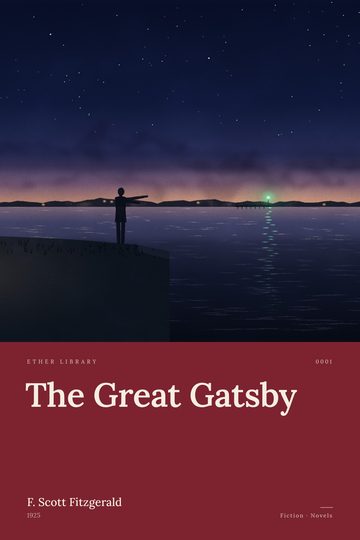
Here is a strange fact about American bookstores. The most famous novels in the building, the ones assigned in every high school English class, are often the ones you could read for nothing. The Great Gatsby costs around fifteen bucks in paperback at the register. It also costs zero dollars online, legally, because it has been in the public domain since January 1, 2021.
So if you have been meaning to read more classics and the price of a shelf of Penguin paperbacks is part of what stops you, good news: it shouldn't. The harder part is not finding free classic books online. It's picking one and getting past chapter three. This post covers both.
Why so many classics are free
In the United States, works published in 1930 or earlier are now in the public domain. The rule of thumb for books from that era is 95 years after publication, and each New Year's Day another year rolls over. On January 1, 2026, the 1930 class arrived: William Faulkner's As I Lay Dying, Dashiell Hammett's The Maltese Falcon, Agatha Christie's The Murder at the Vicarage, and the first Nancy Drew books, among thousands of others, according to Duke's Center for the Study of the Public Domain.
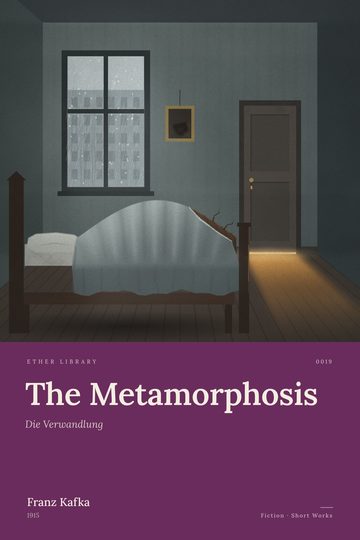
That means anyone can copy, print, translate, or adapt those books without asking. It does not mean every edition is free. A new translation or a modern annotated edition can have its own copyright, even when the original text does not. The 1915 German text of Kafka's The Metamorphosis belongs to everyone; a translator's English from last year belongs to that translator. Keep that distinction in your back pocket and the rest of this makes sense.
One more caveat: copyright rules differ by country. This post is about the U.S. If you're reading from somewhere else, check your local rules before you share files.
The best places to read free classics online
You don't need a shady PDF site. The legitimate options are better anyway.
Project Gutenberg. The granddaddy. Michael Hart started it in 1971, and it now holds roughly 78,000 free ebooks in plain text, HTML, and EPUB. It is the place to find almost any public domain book in English. The tradeoff is that the files vary a lot in polish, and many are old translations.
Standard Ebooks. A volunteer project that takes public domain texts and gives them careful, modern typesetting. The catalog is smaller, but if you want a free ebook that looks like something a publisher made, start here.
LibriVox. Free public domain audiobooks, read by volunteers. Quality ranges from "professional" to "a nice person in their kitchen," so sample a minute before you commit to a narrator.
Your public library, through Libby. Not public domain, but free with a library card. If you want a recent translation of Crime and Punishment or a bestseller about Stoicism, borrow it here.
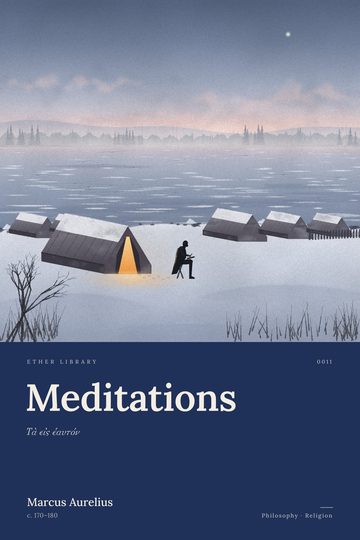
Ether Library. That's us, so take this one with the appropriate grain of salt. We publish complete editions of world classics on EtherXync. Sixteen titles have full English editions right now. Eight of them, including The Metamorphosis, Siddhartha, and the Meditations, are our own new translations from the original German, Greek, Italian, Spanish, and Classical Chinese. The others are English originals like Walden, freshly edited for reading on a screen. Anyone can read the first chapter of any book. A free membership opens the rest and lets you download EPUB and PDF files.
Is there a catch? The catch is that we'd like you to come back. That's about it.
Free is not the hard part. Finishing is.
A lot of people download fifty free classics in one ambitious evening and then read none of them. A free library is a little like a free gym membership. Availability was never the bottleneck.
Here is what actually helps, based on what works for most readers and a bit of math.
Pick by length first, fame second. The average adult reads nonfiction silently at about 238 words per minute and fiction at about 260, according to a 2019 review of 190 studies by the psychologist Marc Brysbaert. Classics, with their longer sentences, will run a bit slower for most of us. Even so, length tells you a lot about whether a book fits your life right now.
| Book (our edition) | Approx. words | Rough reading time |
|---|---|---|
| The Art of War | 9,000 | under an hour |
| The Metamorphosis | 21,000 | about 1.5 hours |
| The Prince | 33,000 | about 2.5 hours |
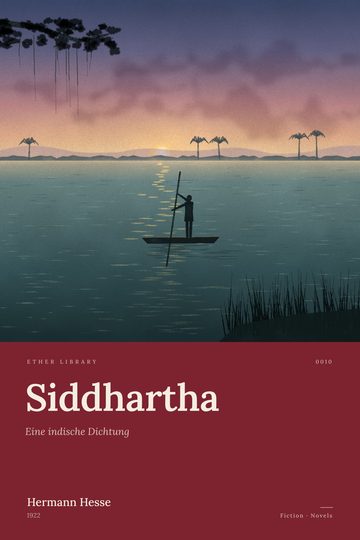
| Siddhartha | 37,000 | about 2.5 hours |
| The Great Gatsby | 48,000 | about 3.5 hours |
| Frankenstein | 64,000 | about 4.5 hours |
Word counts are from our own files and include notes, so treat them as estimates. Still: The Metamorphosis is shorter than a long movie plus the trailers. Gatsby is a cross-country flight.
Read the first chapter before you decide. Not the introduction. Not the translator's note. The first page of the story. If the voice grabs you, keep going. If not, try another book. There is no prize for suffering through a book that isn't speaking to you this year. It may speak to you in five.
Give it a time slot, not a deadline. "I'll finish Frankenstein by Halloween" tends to collapse. "I read on the train home" or "I read for twenty minutes after the kids are in bed" tends to survive. We did the arithmetic in how many classics you can read at 20 minutes a day, and it is more than you'd guess.
A starter list for your first month
If you want a plan instead of a menu, here's one. Four books, roughly ten hours of reading total, in an order that builds momentum.
- Week one: The Metamorphosis. A man wakes up as a giant insect and his main worry is missing his train to work. Funny, horrible, short. You will finish it, and finishing is the point.
- Week two: The Great Gatsby. You probably read it in high school. You probably read it differently at sixteen. The last two pages alone justify a reread, and we wrote about what the green light means if you want a companion.
- Week three: Siddhartha. A spiritual coming-of-age story in plain, rhythmic prose. Good on a weekend morning.
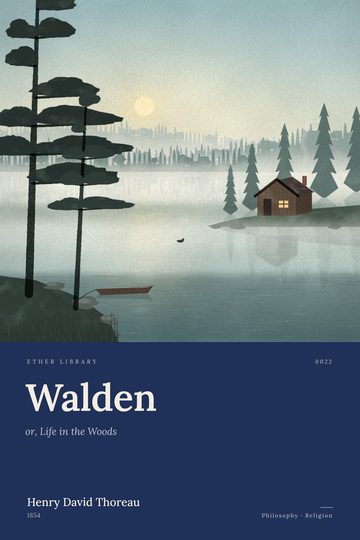
- Week four: dip into Walden. Don't read it straight through. Read the first chapter, "Economy," where Thoreau itemizes what his cabin cost down to the half cent, then skip to "Where I Lived, and What I Lived For." That's the famous one.
If you finish all four, you'll have read more classics this month than many people read in a year, and the next book will feel less like homework.
A quick word on translations
When a classic wasn't written in English, the translation you pick matters more than the cover. Free public domain translations are often a century old, which is why so many people bounce off them. That is not a reason to skip the older ones, which can be wonderful. It is a reason to sample a page from two versions before choosing.
A quick test: read the first paragraph out loud. If you stumble over the sentences in a way the story doesn't seem to call for, try a different translation. Older English versions of The Metamorphosis, for example, often call Gregor a "gigantic insect," while Kafka's German is vaguer and stranger. Ours says "monstrous vermin." Neither is wrong. They just give you different first mornings.
The point of free classic books online was never the price tag. It's that the barrier between you and the most argued-over books in history is one tap. Pick a short one tonight.
Sources
- Duke Law, Center for the Study of the Public Domain, "Public Domain Day 2026": https://cspd.law.duke.edu/publicdomainday/2026
- Wikipedia, "The Great Gatsby" (publication and public domain dates): https://en.wikipedia.org/wiki/The_Great_Gatsby
- Wikipedia, "Project Gutenberg": https://en.wikipedia.org/wiki/Project_Gutenberg
- Marc Brysbaert, "How many words do we read per minute? A review and meta-analysis of reading rate," Journal of Memory and Language, 2019: https://www.Gwern.net/doc/psychology/linguistics/2019-brysbaert.pdf
Made by people and AI together. The EtherXync team sets the topic and direction; research and drafting are done with an AI (Claude). Quotes and numbers are checked and sourced. How we make it