Stoicism for Beginners: The Three Ideas That Matter (and One People Get Wrong)
Stoicism for beginners: who the Stoics were, the dichotomy of control, the evening review, and why being stoic was never about hiding your feelings.
Contents
A few years ago, Stoicism was a dusty corner of the philosophy department. Now it has podcasts, a merch economy, and a surprising number of fans in Silicon Valley and the NFL. You can buy a "memento mori" coin on Amazon.
Some of that is silly. Most of it is understandable. Stoicism is one of the few ancient philosophies that comes with instructions. It isn't mainly about how the universe works. It's about what to do when your flight's canceled, your boss is a jerk, or your kid is sick and you're scared.
If you're starting from zero, here's the short version: who the Stoics were, the three ideas you actually need, and the one big thing people get wrong.
Who were the Stoics?
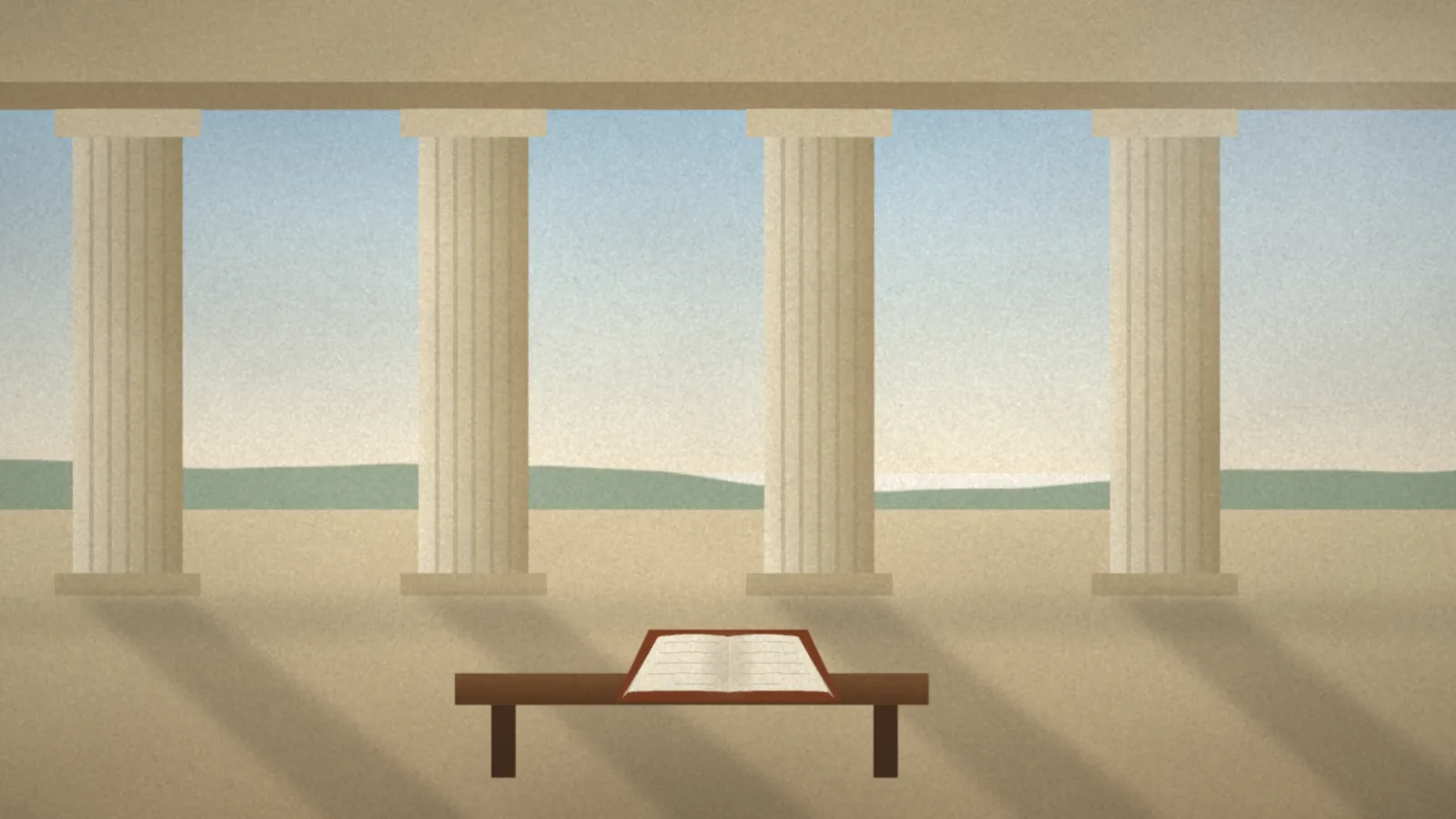
Stoicism began in Athens around 300 BCE, with a merchant-turned-philosopher named Zeno of Citium. He taught in a public colonnade called the Stoa Poikile, the "painted porch," which is where the name comes from. Stoicism literally means "porch philosophy."
Most of the early Greek Stoic writings are lost. What survives, and what most people read today, comes from three Romans who lived centuries later:
- Seneca (c. 4 BCE to 65 CE): statesman, playwright, one of the richest men in Rome, adviser to the emperor Nero. Wrote brilliant letters and essays. Was eventually ordered by Nero to kill himself. Not a simple guy.
- Epictetus (c. 50 to 135 CE): born a slave, later freed, became a teacher. Never wrote anything himself; his student Arrian took notes, which became the Discourses and a short handbook called the Enchiridion.
- Marcus Aurelius (121 to 180 CE): Roman emperor. Kept a private notebook of reminders to himself, which we now call the Meditations.
A millionaire politician, a former slave, and an emperor. It's a philosophy that has been tested at both ends of power.
Idea 1: Know what's up to you
If Stoicism had a slogan, it would be the first line of Epictetus's Enchiridion. In Thomas Wentworth Higginson's 1865 translation:
There are things which are within our power, and there are things which are beyond our power.
This is usually called the dichotomy of control. What's within your power, according to Epictetus, is basically your own judgments, intentions, and actions. Everything else, including your body, your reputation, other people, the weather, the stock market, is outside it, at least partly.
Here's how it plays out on a normal Thursday. Your flight to see family for Thanksgiving is delayed four hours. Is the delay up to you? No. Is the way you treat the gate agent? Yes. Is whether you spend the four hours fuming or reading a book? Yes.
The point isn't to stop caring about outcomes. Epictetus is saying: put your energy where it can actually do something. Worrying about the weather won't change it. Packing an umbrella will.
One practical version people use today is to split goals into the part you control and the part you don't. "Get the promotion" isn't fully up to you. "Do excellent work, ask for feedback, and make my case clearly" is.
Idea 2: It's your judgment that hurts
The second idea follows from the first. Epictetus again, in Higginson's translation:
Men are disturbed not by things, but by the views which they take of things.
Marcus Aurelius says nearly the same thing in the Meditations (8.47): "If you are pained by something outside you, it is not that thing which troubles you but your own judgment of it." (We unpack ten of his best lines in Meditations quotes, explained.)
The claim is that events and our reactions to them are separable. Your coworker didn't reply to your email. That's the event. "She's ignoring me, she thinks I'm incompetent, I'm going to get fired" is the judgment, and it's doing most of the damage.
If this sounds like therapy, there's a reason. Albert Ellis, who founded rational emotive behavior therapy in the 1950s, openly called himself a student of Stoicism and named Epictetus as an influence. Aaron Beck, who developed cognitive therapy, also cited Stoic ideas in his early work. Modern cognitive behavioral therapy is, in part, a descendant of that porch in Athens.
A caution: this isn't the same as "it's all in your head" or "just think positive." Bad things are real. The Stoic move is narrower. It's to notice the extra story you've added on top of the event, and to ask whether that story is accurate and whether it's helping.
Idea 3: Review your day
The third idea is less a belief than a practice. Seneca describes it in his essay On Anger, crediting an older philosopher named Sextius, who would ask himself every night before bed: "What bad habit of yours have you cured to-day? what vice have you checked? in what respect are you better?"
Then Seneca describes doing it himself, in Aubrey Stewart's 1889 translation:
when the lamp is taken out of my sight, and my wife, who knows my habit, has ceased to talk, I pass the whole day in review before myself...
Here's the part people miss: Seneca isn't describing a guilt session. He says the sleep after this review is "sweet," "calm," "sound." The idea is to look honestly at the day, notice where you lost your temper or wasted time, and decide what to do differently, without spiraling. It's a five-minute debrief, not a trial.
If you want to try one Stoic practice, make it this one. Before bed, ask yourself three questions:
- What did I do well today?
- Where did I fall short?
- What will I do differently tomorrow?
Write the answers down if you like. A journal is basically what the Meditations is. (We have tips on that in how to start journaling.)
The big misconception: Stoics weren't emotionless
In everyday English, "stoic" means keeping a stiff upper lip. The stoic cowboy. The stoic dad who never cries. That's not really what the ancient Stoics taught.
The Stoics did think that destructive passions like rage, panic, and envy came from mistaken judgments, and that a wise person could, with practice, free themselves from those. But they weren't against feelings in general. They valued what they called good feelings: joy, reasonable caution, and rational wishing, which included wishing others well. Marcus is constantly reminding himself to be kind. Seneca writes tender letters to grieving friends and admits to his own grief.
The goal wasn't to bury emotions. It was to change the judgments that produce the destructive ones. Pushing feelings down while still believing that the world has wronged you isn't Stoicism. It's just suppression, and it tends to blow up later.
This matters, because a certain online version of Stoicism has become a kind of tough-guy branding, all cold showers and "don't let anything bother you." The original is warmer and, frankly, wiser. Marcus Aurelius was the most powerful man in the world, and he wrote reminders to himself to be patient with irritating people because they were his kin.
How to start with Stoicism
You don't need to read everything. Here's a simple path:
- Read the Enchiridion by Epictetus. It's very short, an hour or two. It's the most direct introduction to the core ideas.
- Dip into the Meditations. Not front to back. A few entries a day with your morning coffee.
- Pick up Seneca's short essays. On the Shortness of Life is the most popular, and the one we draw on in our post on time management.
- Try one practice for a month. The evening review is the easiest. Or each morning, before checking your phone, ask: "What's within my power today?"
Stoicism isn't a personality type. It's a set of tools for handling the parts of life you can't control and taking full responsibility for the parts you can. It's worth trying on, even if you never buy the coin.
The Meditations and Seneca's Dialogues, including On the Shortness of Life and On Anger, are in the Ether Library in complete Korean translations from the Greek and Latin. The Meditations is also out in our new English translation.
Sources
- Epictetus, The Enchiridion, trans. Thomas Wentworth Higginson (1865, public domain). Online text: https://www.gutenberg.org/files/45109/45109-h/45109-h.htm
- Seneca, On Anger, Book III, trans. Aubrey Stewart (1889, public domain).
- Marcus Aurelius, Meditations, 8.47, quoted from the Ether Library English translation.
- Stephen Dickinson, "The lineage of positive psychology and cognitive behavioral modalities: How Stoicism inspired modern psychotherapy," Discover Psychology, 2024: https://link.springer.com/article/10.1007/s44202-024-00121-w
Made by people and AI together. The EtherXync team sets the topic and direction; research and drafting are done with an AI (Claude). Quotes and numbers are checked and sourced. How we make it