How to Stop Procrastinating When You Already Know You Should
How to stop procrastinating, based on research: why it's a mood problem more than a time problem, and six small fixes that work better than another planner.
Contents

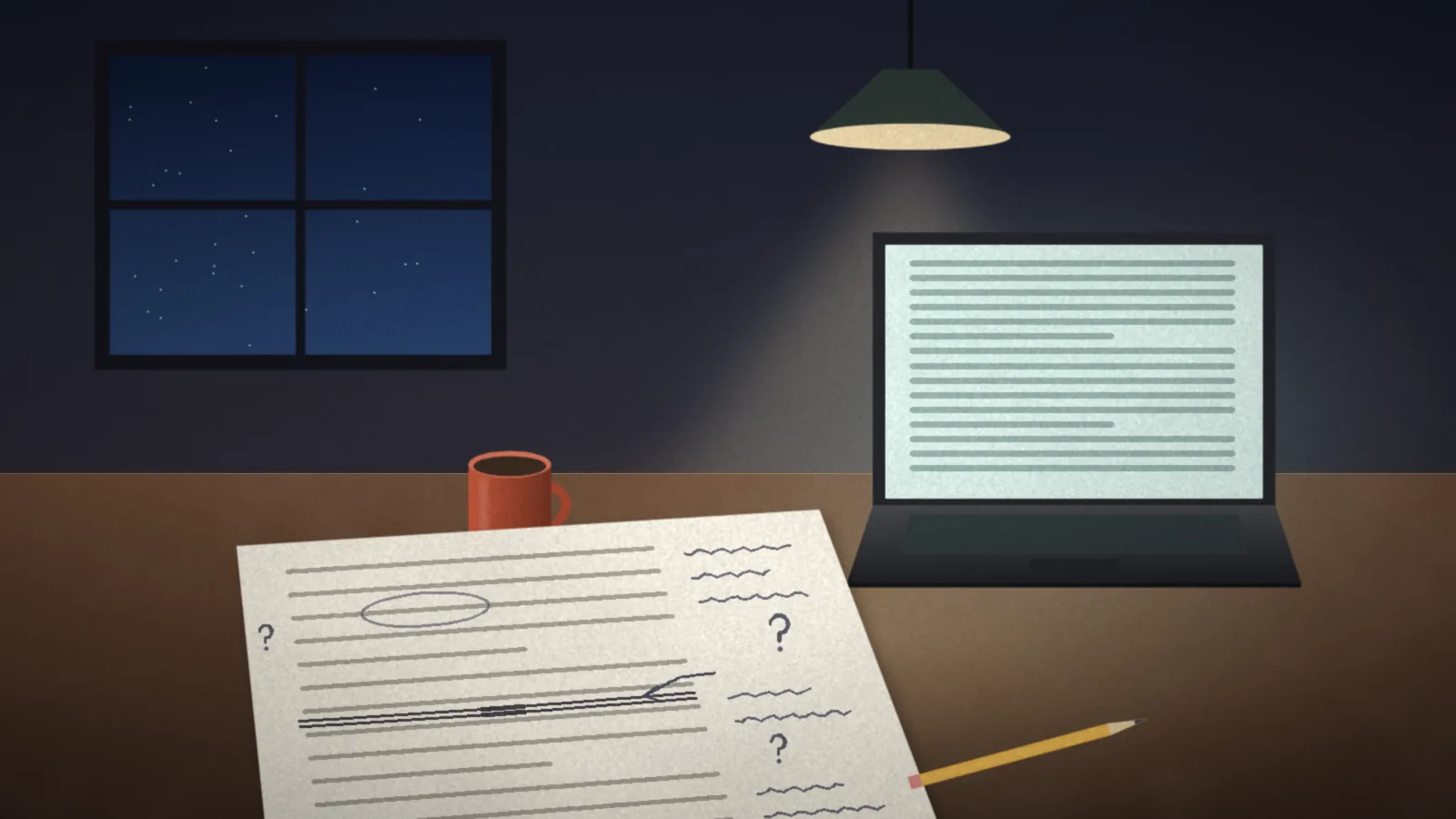
It's 9:40 on a Sunday night. The report is due Tuesday. You know exactly what you need to do. And somehow you have just spent twenty minutes reading about the history of the Pringles can.
If you're looking up how to stop procrastinating, you probably don't need anyone to tell you that procrastination is bad. You know. That's the frustrating part. Most advice treats it like a scheduling problem, as if one more color-coded calendar would fix it. The research points somewhere else, and once you see it, the fixes start to make more sense.
Procrastination is a mood problem wearing a time costume
Psychologists Fuschia Sirois and Timothy Pychyl, two of the leading researchers on procrastination, put it plainly in a 2013 paper: procrastination is largely about short-term mood repair. When a task makes you feel anxious, bored, insecure, or overwhelmed, putting it off makes the bad feeling go away right now. The Pringles article isn't a failure of planning. It's a very effective, very temporary painkiller.
The bill, of course, arrives later, and it goes to a person you don't feel especially close to: future you. Sirois and Pychyl describe this as a gap between our present and future selves. Present you gets the relief. Future you gets the panic, the all-nighter, and the lukewarm coffee at 2 a.m.
This explains a lot. It's why you can procrastinate on things you genuinely care about, sometimes especially those. A task that matters is a task that can make you feel inadequate. It's also why cleaning the entire kitchen is a classic procrastination move. It feels productive, and it isn't the thing.
How common is this? In a 2007 meta-analysis in Psychological Bulletin, the Calgary psychologist Piers Steel estimated that roughly 15 to 20 percent of adults are chronic procrastinators. Most of the rest of us just do it sometimes.
A 2,000-year-old diagnosis
The Roman philosopher Seneca would not have been surprised by any of this. In On the Shortness of Life, written around the middle of the first century, he takes aim at people who are always planning to start living later. In Aubrey Stewart's 1889 translation:
postponement is the greatest waste of life: it wrings day after day from us, and takes away the present by promising something hereafter
Takes away the present by promising something hereafter. That's the trick procrastination plays. It feels like you're saving the task for a better version of tomorrow. You're actually trading away today.
Six fixes that work better than another planner
None of these are magic. They're just aimed at the real problem, which is the feeling, not the clock.
1. Shrink the first step until it's almost silly
The hardest moment is the start, because that's when the bad feeling peaks. So make the start tiny. Not "write the report." Instead: "open the document and type the title." Not "do my taxes." Instead: "find last year's W-2."
David Allen's well-known two-minute rule from Getting Things Done is related: if something takes less than two minutes, do it now. For bigger tasks, use the spirit of it. Find the two-minute version of the first step and only commit to that. Often you'll keep going. If you don't, you still did more than the Pringles article.
2. Decide when and where, in advance
"I'll work on the presentation this week" is a wish. "On Tuesday after my 10 a.m. meeting, I'll sit in the small conference room and draft three slides" is a plan.
Psychologists call these implementation intentions, if-then plans that tie an action to a specific situation. In a 2006 meta-analysis of 94 studies, Peter Gollwitzer and Paschal Sheeran found they had a medium-to-large effect on whether people actually reached their goals. It works because it takes the decision out of the moment. When the moment comes, you're not deciding whether to start. You already decided.
3. Forgive yourself for the last time
This one sounds soft. It has data behind it.
In a 2010 study, Michael Wohl, Timothy Pychyl, and Shannon Bennett followed 134 first-year college students through two rounds of midterms. Students who forgave themselves for procrastinating before the first exams felt less negative afterward, and procrastinated less before the second round.
That makes sense once you remember that procrastination is mood repair. Beating yourself up adds more bad feeling to the task, which makes avoiding it even more tempting. Self-forgiveness isn't letting yourself off the hook. It's taking the extra weight off so you can actually pick the thing up.
4. Bundle the task with something you enjoy
Katherine Milkman and her colleagues at the University of Pennsylvania ran an experiment where people could listen to page-turner audiobooks they loved, but only at the gym. That group initially went to the gym 51% more often than the control group. The effect faded over time, especially after Thanksgiving, which is honestly the most relatable finding in all of social science.
Milkman calls this temptation bundling. Your favorite podcast only while doing the dishes. The good coffee only during the hour you work on your novel. The pleasure goes where the dread used to be.
5. Assume it will take longer than you think
In a classic study, Roger Buehler and his colleagues asked psychology students to predict when they'd finish their senior theses. The average guess was about 34 days. The average actual time was about 56 days, and only around 30 percent finished by their own estimate. Even their "if everything goes wrong" guess was too optimistic.
This is the planning fallacy, and it feeds procrastination. If you think a task will take two hours, starting it on Monday feels unnecessary. Pad your estimates, or better, think about how long similar tasks took last time, not how long this one should take.
6. Make the escape route a little harder
You don't have to beat temptation by willpower if you can just move it. Put your phone in another room. Log out of the site you always end up on. Close every tab except the one you need. These are small hurdles, but procrastination lives in small gaps. Every extra step between you and the distraction gives the feeling time to pass.
What not to do
A few popular fixes are worth skipping, or at least taking with a grain of salt.
Waiting until you feel like it. The research suggests the feeling often comes after you start, not before. Motivation is frequently a result, not a requirement.
Relying on deadline panic. Some people say they work best under pressure. Maybe. But the work often isn't better, and the stress is real. Steel's review linked procrastination to worse performance and lower well-being on average.
Buying a new system. A new app or planner can give you a burst of energy, which is nice, but it's also a sneaky way to procrastinate. If you have a calendar and a to-do list, you have enough. The problem was never the tools.
The quiet skill underneath
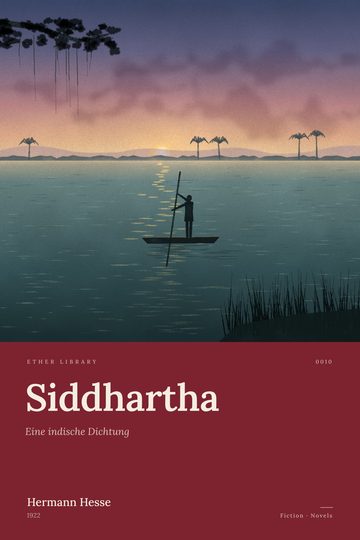
In Hermann Hesse's Siddhartha, the young wanderer arrives in a city with nothing and is asked what he can do. He says: "I can think. I can wait. I can fast." Later he explains that because he can wait, he "knows no impatience, he knows no emergency."
That's an interesting mirror for procrastination, which can look like waiting but is really the opposite. A procrastinator can't sit with discomfort for even a minute, so they flee to something easier. Siddhartha's waiting is calm. He can hold an unpleasant feeling without running from it.
You don't need to become a wandering ascetic. But the next time you feel the pull toward the Pringles article, try something small: notice the feeling, name it ("I'm anxious this won't be good enough"), and do the two-minute version anyway. The feeling usually shrinks once you've started. It almost never shrinks while you wait.
You can read Siddhartha in our new English translation. Seneca's essay is in the Ether Library as well, currently in Korean, and we come back to him in a post on time management tips from Seneca.
Sources
- Fuschia M. Sirois and Timothy A. Pychyl, "Procrastination and the Priority of Short-Term Mood Regulation: Consequences for Future Self," Social and Personality Psychology Compass, 2013: https://eprints.whiterose.ac.uk/91793/
- Piers Steel, "The Nature of Procrastination," Psychological Bulletin, 2007. Summary: ScienceDaily, January 2007: https://sciencedaily.com/releases/2007/01/070110090851.htm
- Peter M. Gollwitzer and Paschal Sheeran, "Implementation Intentions and Goal Achievement: A Meta-analysis of Effects and Processes," Advances in Experimental Social Psychology, 2006: https://kops.uni-konstanz.de/entities/publication/2e749bfb-8533-437c-8203-7e788c910c5f
- Michael J. A. Wohl, Timothy A. Pychyl, Shannon H. Bennett, "I forgive myself, now I can study," Personality and Individual Differences, 2010. Summary: BPS Research Digest: https://bps.org.uk/research-digest/cure-procrastination-forgive-yourself
- Katherine L. Milkman, Julia A. Minson, Kevin G. M. Volpp, "Holding the Hunger Games Hostage at the Gym: An Evaluation of Temptation Bundling," Management Science, 2014: https://repository.upenn.edu/oid_papers/150
- Roger Buehler, Dale Griffin, Michael Ross, "Exploring the 'planning fallacy'," Journal of Personality and Social Psychology, 1994. Summary: https://en.wikipedia.org/wiki/Planning_fallacy
- Seneca, On the Shortness of Life, trans. Aubrey Stewart (1889, public domain).
- Hermann Hesse, Siddhartha (1922), quoted from the Ether Library English translation.
Made by people and AI together. The EtherXync team sets the topic and direction; research and drafting are done with an AI (Claude). Quotes and numbers are checked and sourced. How we make it