How We Translate Classics With AI: A One-Person Studio's Making-Of, Part 1
How one person and an AI built a free library of translated classics: who decides what, how the translation checks work, and the one word we argued over.
Contents
In September 2023, Amazon put a new limit on its self-publishing platform: no more than three new titles a day per account. The move came as the company was dealing with a wave of AI-generated books, and around the same time it began asking publishers to tell it when their content included "AI-generated text, images, or translations."
Notice who gets told in that policy. Amazon does. Whether the reader ever finds out is a separate question.
We think the reader should be told, plainly and up front. So this is the first in a twice-a-month series about how EtherXync actually gets made. Here's the short version: this site is built by one person working together with an AI. Everything below is about what that looks like in practice, including the parts that took many tries.
Who does what
EtherXync is run by a single independent operator, Aiden. He works with Claude, an AI model made by Anthropic. The split is simple to describe and takes discipline to keep:
- Aiden sets the direction and makes the calls. What to build, which books to publish, what sounds right, what's good enough to ship, and what gets sent back.
- Claude does translation, coding, research, and first drafts. That includes the drafts of posts like this one, which Aiden directs and reviews.
The website runs on Cloudflare Pages and deploys from a GitHub repository. That's the whole team. There's no editorial staff hiding behind the curtain. When we say "we" on this blog, we mean the two of us.
We'd rather you know that than wonder. Every post on this blog ends with a short note saying it was made by a person and AI together. This post is just the long version of that note.
The Ether Library: what's in it
The project we've spent the most time on is the Ether Library, a free collection of public-domain classics.
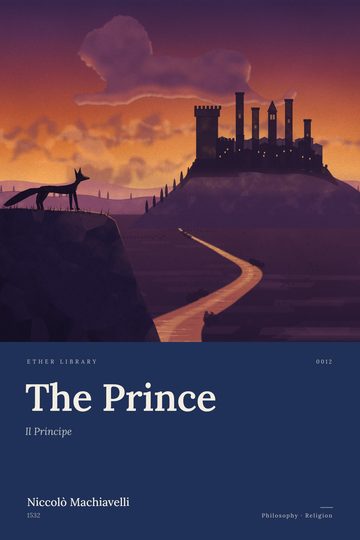
On the Korean side, that's 22 complete translations into Korean. Not all of them come from English. Meditations was checked against Marcus Aurelius's Greek, The Prince against Machiavelli's Italian, and Hesse and Kafka against the German.
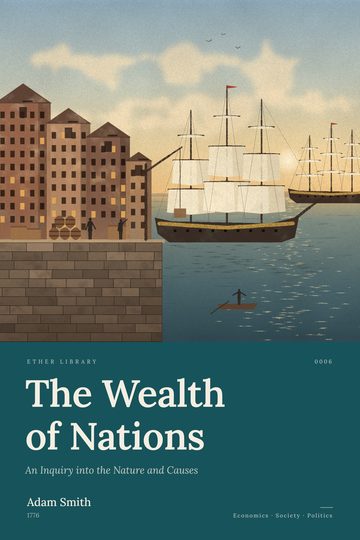
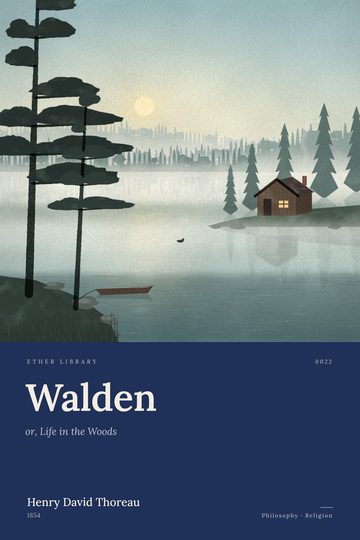
On the English side, there are 16 editions. Eight are books originally written in English, like Walden, Frankenstein, and The Wealth of Nations. The other eight are our own English translations, including Meditations and The Prince. All of them are free, and you can read them on the web or download them as EPUB or PDF.
On copyright, we're careful. We only publish books that are in the public domain in both Korea and the United States. When a book is still protected in some other country, visitors from that country are blocked from it and shown a notice explaining why. Public domain rules differ around the world, and "it's free where we live" isn't a good enough reason to ignore that.
How a translation gets made
People sometimes imagine AI translation as pasting a book into a chat window and getting a translation back. That would be fast. It would also be bad. The workflow we use for the Korean translations has several stages, and most of them exist to catch the problems that a first pass creates.
1. A translation spec comes first. Before a single chapter is drafted, we write a spec for the book: a glossary that locks how key terms will be translated, and a voice chart that sets how each character or narrator speaks. A 250-year-old economics treatise and a Kafka story need very different voices.
2. The first draft. Claude drafts the translation chapter by chapter, following the spec.
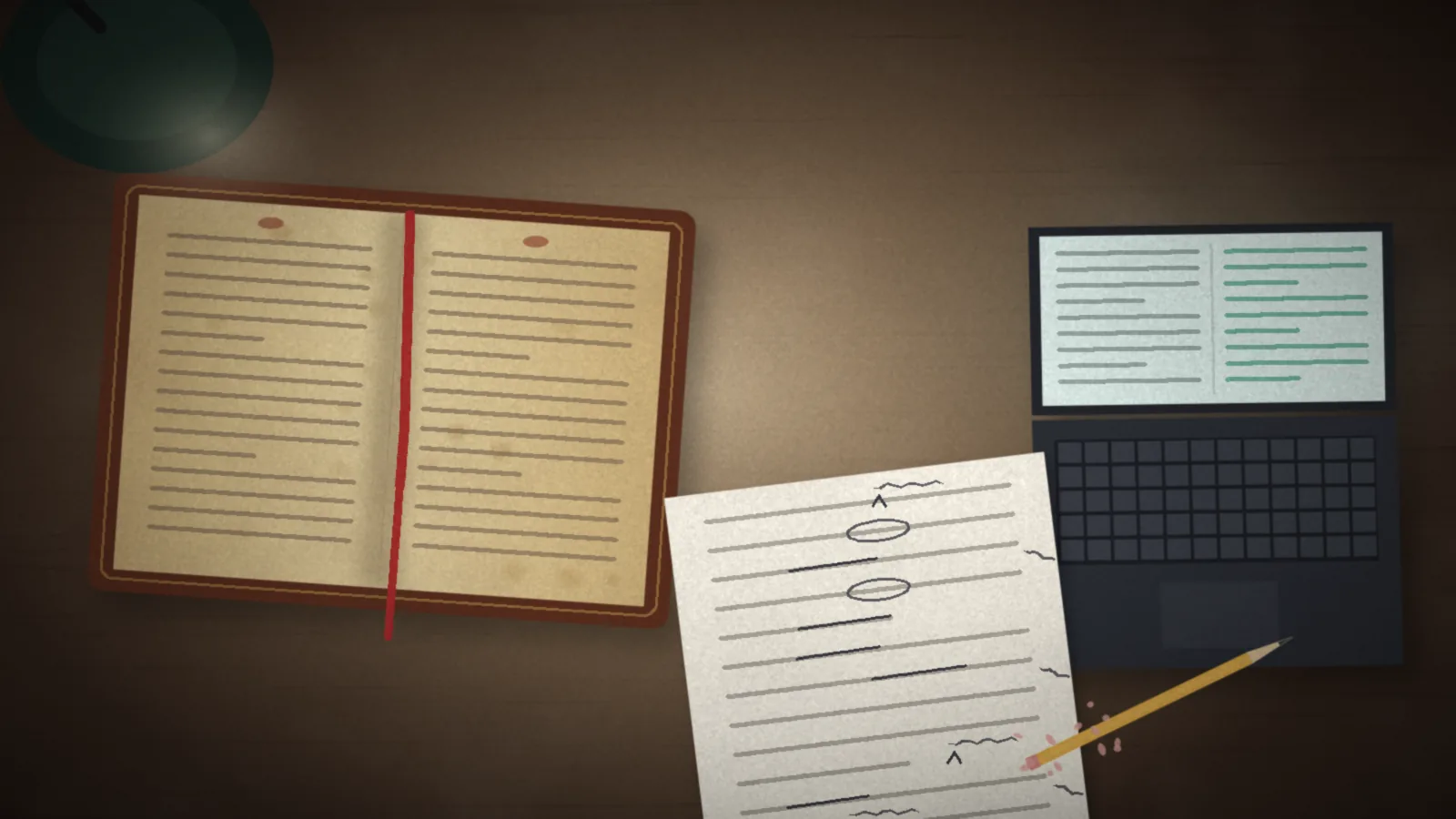
3. The cold read. This is the step we'd recommend to anyone who translates anything. The draft is read in Korean only, with the original covered up. The question is simple: does this read like a real book, or like a translation? Awkward phrasing that you'd never notice while comparing line by line jumps out when you read it cold.
4. Checking against the original. Then the original comes back out, and the draft is compared against it for meaning.
5. Automatic checks. Scripts check things people are bad at noticing: whether every paragraph in the original has exactly one matching paragraph in the translation, whether glossary terms are used consistently, and whether the text has slipped into stiff translationese or the telltale patterns of AI-generated prose.
6. E-book build checks. Finally the EPUB and PDF files are built and tested, so the book actually works on the device you open it on.
One word we argued over
Here's a real example of a decision a person made. It comes from The Wealth of Nations, in the chapter on wages and profit, where Adam Smith describes how apprenticeships worked:
During the continuance of the apprenticeship, the whole labour of the apprentice belongs to his master.
To an English reader, "master" here is unremarkable. But Korean doesn't have one word that covers everything English "master" can mean. One common Korean equivalent, juin (주인), means something closer to "owner," the master of a house, of a servant, of a thing. Use it here and Smith's apprentice starts to sound like property.
The word Aiden chose for this context was jangin (장인), which means a master craftsman: the skilled worker who teaches the trade. He judged it was better than juin, and the translation was changed. Smith uses "master" in several different senses across the book, so the rule became "translate it by context," with the glossary recording which sense goes with which situation.
It's a small decision. It's also exactly the kind of decision the whole process is built around. An AI can produce a fluent sentence with either word. Whether the sentence means what Smith meant is a judgment, and it's one we don't hand off.
Beyond books: games, the blog, and an app
The library isn't the only thing built this way.
The games. The arcade has Xync, a rhythm game played to classical scores whose copyright has expired, plus Word Rush, Neon Drive, Buzzer Beater, Paper Plane, and Clay Shot. The way they got good is not glamorous. Aiden plays them, then gives feedback like "the notes are off," "the buttons are too close together," or "the timing is confusing," and the game gets fixed and played again. That loop has run dozens of times. Xync alone is on its seventh major overhaul.
This blog. One post goes up every day, scheduled and published automatically with GitHub Actions. The English blog isn't translated from the Korean one. It's written separately for American readers, with its own topics, examples, and sources. Social media posts go out through an automation we built ourselves.
One Page English. Aiden built this app with Claude Code for Korean speakers learning English. It has 180 chalkboard-style lessons and a one-time lifetime price of ₩4,900. It's a Korean-language app, so most readers of this blog won't need it, but it's part of the same story.
What we've learned so far
If there's one idea in all this worth taking away, it's that "made with AI" isn't really a description of quality. It's a description of who did the typing. What makes a translation trustworthy, or a game fun, is everything that happens after the first draft: the cold read, the checking against the original, the person who plays the game one more time and says the buttons are still too close.
The AI makes it possible for one person to attempt a project this size at all. The person is what makes it worth reading.
Next time, in Part 2, we'll talk about building the games, site, and social automation, and this time we'll focus on what went wrong.
In the meantime, you can see the result for yourself. Try The Wealth of Nations, our translations of Meditations and The Prince, or browse the whole Ether Library. If you're new here, our guide to free classic books online is a good place to start.
Sources
- The Authors Guild, "Amazon Adds to KDP Generative AI Policy, Caps Daily Self-Publishing Uploads," September 27, 2023: https://authorsguild.org/news/amazon-adds-to-kdp-generative-ai-policy-caps-daily-self-publishing-uploads/
- Adam Smith, The Wealth of Nations (1776), Book I, Chapter 10, Part I, quoted from the Ether Library English edition.
- EtherXync's own production records (translation specs, review notes, and game feedback logs).
Made by people and AI together. The EtherXync team sets the topic and direction; research and drafting are done with an AI (Claude). Quotes and numbers are checked and sourced. How we make it